Reversed perspective: Doug Roberts reflects on his close friendship with David Hockney
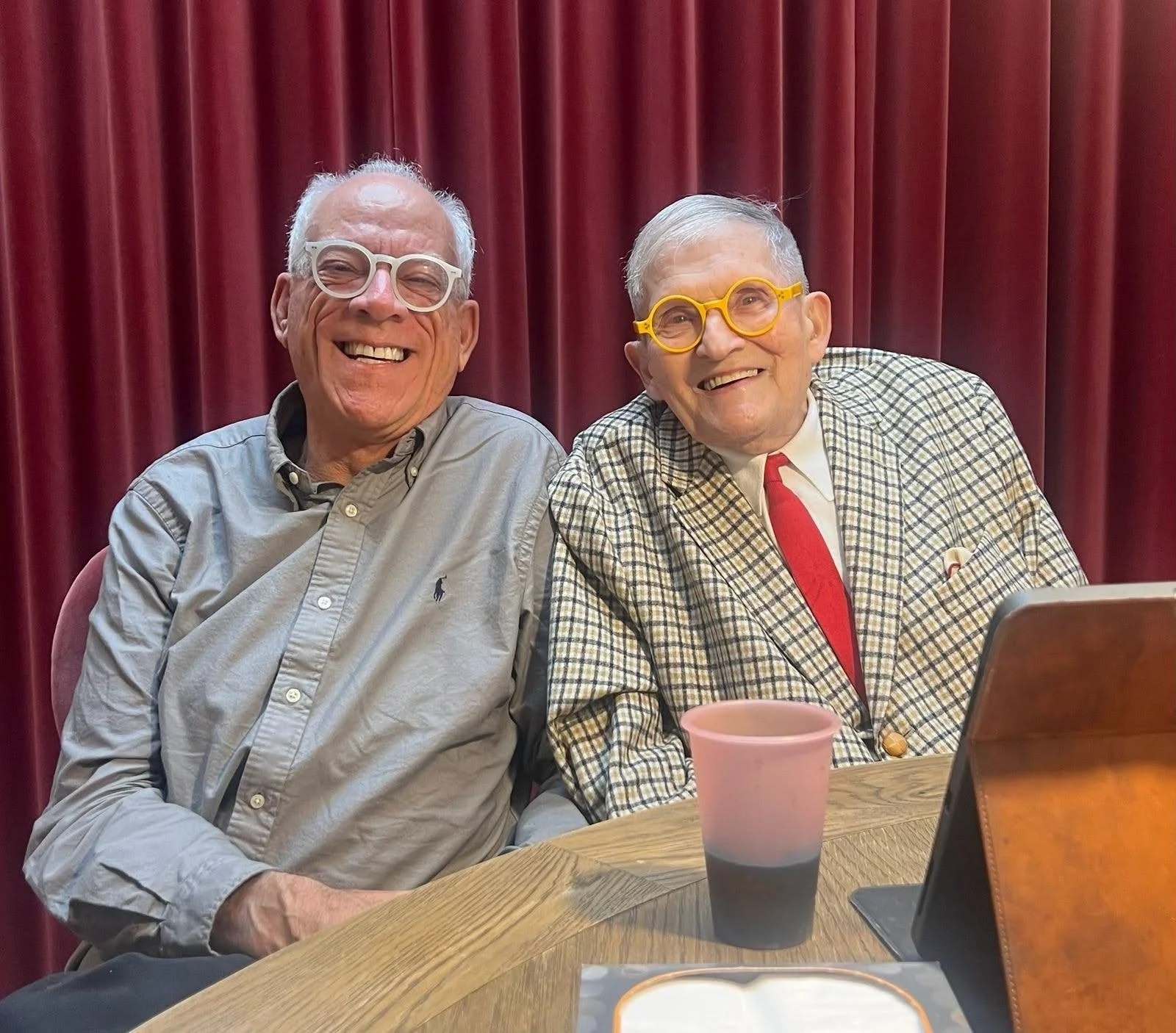
Doug Roberts with David Hockney, . Photo by Richard Hockney.
David Hockney died on June 11, 2026, making my thirty-third birthday significantly less celebratory.
Only six days later, I was fortunate enough to receive a call from his dear friend Doug Roberts. The Los Angeles art dealer first met Hockney in the early 1980s, when a two-hour lecture on Picasso sparked an intellectual rapport between the two that grew into a friendship spanning more than four decades.
Throughout our conversation, Roberts offered his perspective as someone who had watched Hockney’s ideas move from conversations, to experiments, and finally to realised works. His recollections moved easily between Hockney’s studio, the works taking shape within it, and the experiments he witnessed firsthand, occasionally becoming a subject within those works himself.
“He was interested in curiosity,” Roberts recalls. “Once he understood something, he wanted to discover something else.”
Hockney remained remarkably unwilling to accept vision as something fixed. Perspective could be reversed, a camera could draw, a rectangle could acquire two additional corners, and new technologies became useful precisely because each presented another problem to solve. Perhaps the most fitting way to honour an artist who spent his life questioning how we see is simply never to stop looking.
The following conversation took place by phone on June 17, 2026, between Tāmaki Makaurau Auckland and Los Angeles, California.
—Clare Gemima, October 2026
Clare Gemima: Doug, how did you first meet David?
Doug Roberts: I met David shortly after graduating from UCLA. I studied drawing and painting, but after college I was worried about paying rent, so I started working for art dealer Margo Leavin. I transitioned from being an art student into selling other people’s work. I could talk about art because I was an art guy, and surprisingly that made me a pretty good salesman.
CG: I wish I had that skill.
DR: I met David around 1982. We ended up having a two-hour conversation. He lectured me about Picasso, and I could actually keep up, I guess because I was an art-school kid. We became friends because I could engage with him on that level.
Most people who met David were thrilled simply because he was David Hockney, but I would challenge him. He would challenge me right back. There was a real exchange.
Over the years he continued to surprise me. Sometimes it felt as though he was experimenting partly to see how people like me would react. If I became excited, he became excited. I was a kind of barometer for whether an idea communicated successfully. If I understood what he was doing, he felt others would too.
CG: So it was a natural gelling?
DR: A completely natural gelling. I knew David for half of his life. I met him when he was around forty-two or forty-three, and he lived to eighty-eight.
CG: Did you ever become one of his dealers?
DR: No, David had his own dealers. I was always on the periphery of that, but as an art dealer myself I did sell his work on the secondary market, particularly his prints.
One of my collectors, Jordan Schnitzer, was the driving force behind the exhibition in Honolulu that you wrote about. Jordan had assembled almost all of David’s homemade copier prints. At one point he owned thirty of the thirty-eight editions. I asked David if he could help Jordan locate the remaining works.
David checked through his drawers and said, “I don’t have all eight, but I do have four.” So he did occasionally help me with things like that.
CG: What did David think about being in Jordan Schnitzer’s collection?
DR: He admired Jordan’s enthusiasm as a collector. David was pleased to be represented so extensively in the collection. At the same time, David had enough ego to think, “of course Jordan should have all my work.”
I also helped Jordan acquire some of David’s earliest prints. One of them was a tiny lithograph self-portrait David made while still in school, before the Royal College. He produced it on the floor of his family’s living room and apparently made quite a mess. His mother wasn’t thrilled about that.
Only a handful of impressions were ever printed. One remained in his mother’s house for decades. When she died, it passed to one of David’s brothers, who eventually consigned it to Christie’s.
When it came up for sale, I immediately called Jordan and said, “You have to buy this. This is the print that hung in David’s mother’s house for sixty years.”
CG: This is the 1954 lithograph?
DR: Correct. I told Jordan that the work should hang at the entrance of every Hockney exhibition he organised. The provenance was extraordinary. Jordan was very close to his own mother, and she was one of the reasons he became a collector, so it felt like the perfect match.
When I told David that Jordan had purchased it, David was angry.
CG: Because his brother sold it?
DR: Exactly. I told him not to worry. It was in excellent hands and would be seen by more people than ever before. Nobody had seen it hanging in his mother’s house, but now it would be part of exhibitions all over the world, and be properly cared for.
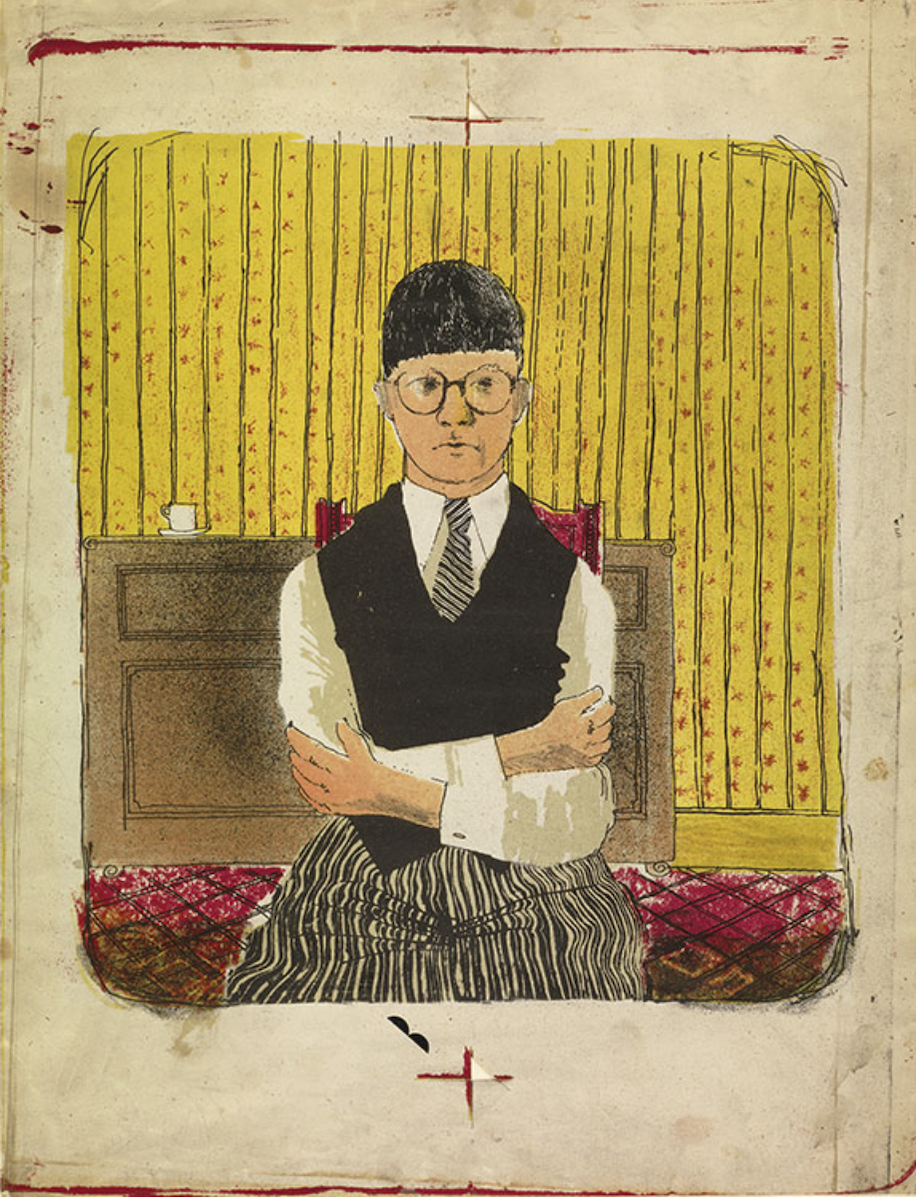
David Hockney, Self Portrait, 1954, lithograph in five colors, A.P. I,. 11 ½ × 10 ¼ in. The David Hockney Foundation. © David Hockney. Photo by Richard Schmidt.
CG: I’ve only seen reproductions, but it’s a beautiful image. He was only 17 when he made it.
DR: And it’s still in the original frame. Everything about it is original. David probably framed it himself around 1955. You can see where the paper was cut by hand. The whole object carries that history.
CG: What I loved was seeing it installed beside the Dennis Hopper photograph.
DR: Ah, yes. That photograph was taken in New York—I believe it dates from David’s second visit there in 1963. His first visit was in 1961 while he was still a student. By 1963 he had met Henry Geldzahler and some of the New York crowd, and I think that photograph was taken around that time. David came along with an accent, the confidence, and the flamboyance. I think he was just a bit much for some of them.
CG: So, David would have seemed quite shocking? He also admired Stanley Spencer, who in some ways feels like a kind of gay icon, albeit not in an explicit sense.
DR: Absolutely. David was very overt. He was unapologetically gay while he was still in college, and I think that’s one reason he made so many friends. He would tease the straight boys he had crushes on. They generally kept him at arm’s length, but they weren’t hostile toward him. Some of those early paintings reflect that dynamic. The Cha Cha that was Danced in the Early Hours of 24th March, 1961, for example, was based on one of his classmates, a young man David had a huge crush on, even though he was completely straight.
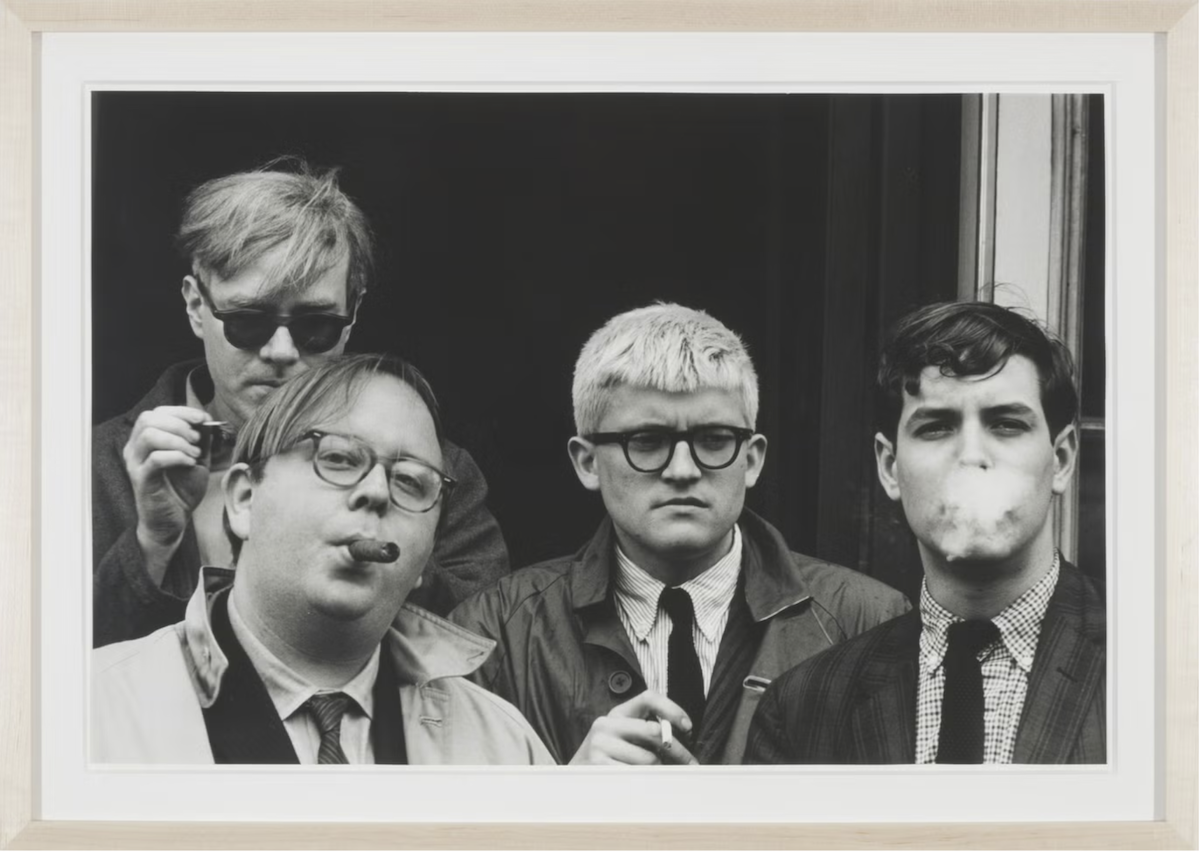
Dennis Hopper, Andy Warhol, David Hockney, Henry Geldzahler and Jeff Goodman from “Out of the 60’s” from The Geldzahler Portfolio, 1997, published 1998. © Dennis Hopper. Collection of The Museum of Modern Art, New York. Gift of Agnes Gund and Daniel Shapiro.
CG: When did homosexuality actually become legal in Britain and the United States? My history is admittedly a little weak there.
DR: In Britain it became legal in 1967, but that followed roughly a decade of public debate and reform efforts. David was involved in those discussions while he was a student. He attended protests and demonstrations throughout that period.
The process began around 1956 and took about ten years before Parliament finally acted. David lived through all of that while he was at art school and the Royal College. When homosexuality was finally legalised in Britain, he released his famous series of homoerotic prints and illustrations for poems by C. P. Cavafy almost immediately.
In the United States, homosexuality remained classified as a psychological disorder until 1973.
CG: The delays in those processes really are extraordinary. How tragic.
DR: Even after legal changes, many gay men continued to live in the closet well into the 1980s. That’s one reason the AIDS epidemic spread so rapidly. People were living hidden lives, meeting in private, and operating outside public view. The epidemic became one of the defining realities of that decade.
CG: The Dennis Hopper photograph I’m looking at was published in 1998 by the Estate Project for Artists with AIDS as part of Henry Geldzahler’s portfolio. It shows David with Geldzahler, whom we just mentioned, but also Andy Warhol and Jeff Goodman.
DR: Ah, yes. Jeff Goodman was gay. They travelled together in Italy, and David painted aspects of that trip.
CG: I suspect some people still travel to Italy using much the same map. I love the quote where David said something about Jeff along the lines of, “We were never romantic, we were just two sexy friends.”
DR: The idea of “sexy friends” was actually quite common. Even in the 1980s, many friendships began after a brief romantic encounter. You might have a one-night stand and then become lifelong friends afterwards. It sounds backwards, but that was often how things worked.
But there was also a sense of rebellion to it. When society tells you that your existence is criminal, simply living your life becomes a form of resistance.
As for David and Andy Warhol, they got along reasonably well, although Andy was a bit eccentric. One thing people forget is that Andy was running a substantial business by that point. The Factory employed twenty or thirty people. He wasn’t necessarily running out of money, but he constantly needed revenue to keep everything going.
Even before Leo Castelli began showing his work, Andy was already successful. He owned a brownstone on East 66th Street and had made considerable money through commercial illustration and design work. By the 1980s he was taking commissions from almost anyone willing to pay. The famous Muhammad Ali portraits, for example, were commissioned by the Weissman family. Each brother received a portrait. Andy later turned the project into a print portfolio, but it began as a paid commission.
The same was true for many of the society portraits he made during the period. Wealthy collectors, socialites, and patrons would commission portraits directly.
David almost never accepted commissions.
CG: Almost never?
DR: Just once. He accepted a commission from Glyndebourne Opera to paint a portrait of their founding director. The only reason was that he had a longstanding relationship with Glyndebourne through his opera designs.
Even so, he regretted taking the commission.
CG: Just on principle?
DR: David only liked painting people he knew on his own terms. With a commission there are expectations. The portrait has to satisfy someone. It has to resemble the sitter. It has to fulfil a purpose. David hated that constraint.
Normally his attitude was, “If it doesn’t look exactly like you, tough.” The painting was going to be the painting. But with a commission, he felt obligated to satisfy somebody else’s expectations, and that wasn’t how he wanted to work. He felt restricted by the arrangement and decided never to do it again.
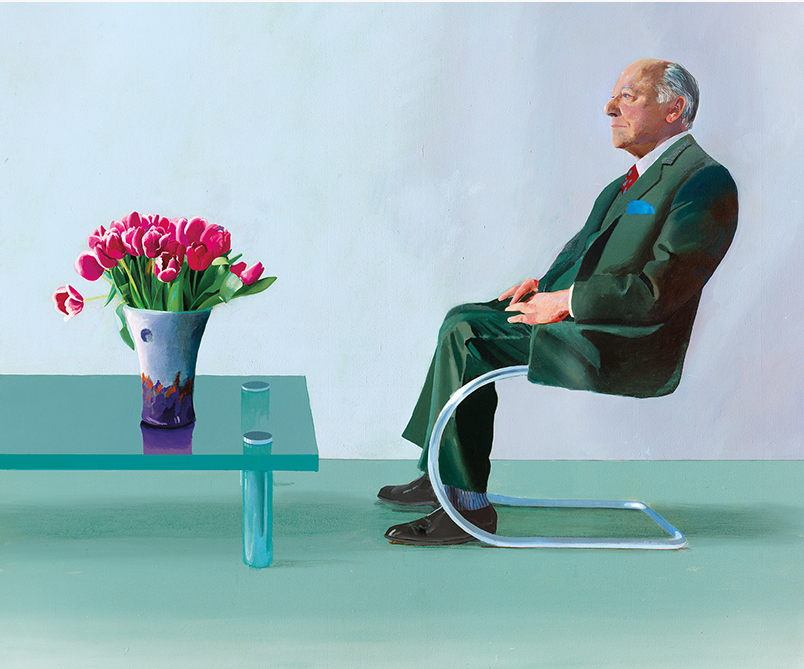
David Hockney, Portrait of Sir David Webster, 1971, acrylic on canvas, 57 × 72 in. © David Hockney / Tyler Graphics Ltd.
“But there was also a sense of rebellion to it. When society tells you that your existence is criminal, simply living your life becomes a form of resistance.”
CG: Let’s see… is that the Portrait of Sir David Webster?
DR: Yes. That’s the only formal commission David ever accepted. A few years ago they sold it to raise money. David was furious. His attitude was always, “Why would you sell it? Don’t you want to live with it forever?”
CG: That’s interesting. So Hockney was the complete opposite to Warhol. The list of people Warhol painted, as you alluded to earlier, really does feel infinite.
DR: Warhol also painted Holly Solomon’s portrait.
CG: My understanding of Los Angeles is pretty limited, but because of the artists I work with, I’m friends with Holly’s son Tom Solomon. That’s really been my entry point into that world.
DR: Tom and I actually had our own gallery together in the 1990s.
CG: Wow, really?
DR: Yes. I still speak with Tom all the time. In fact, I spoke to him a couple of days ago.
CG: Tom is incredibly enthusiastic and endlessly fascinating to talk to.
DR: I’ve known him forever. Tom and I ran a gallery on Fairfax for nearly a decade. Eventually his parents died, and he had to return to New York to deal with the estate.
Tom became a genuinely intellectual art-world figure. He’s done a tremendous amount in his career.
CG: He’s incredibly fun to walk through an art fair with because he’s drawn to difficult work. Work that’s resistant, challenging, sometimes even uncomfortable. I’ve been told that Holly had that quality as well.
DR: Absolutely. Whereas I’m much more attracted to representational painting. I worship David Hockney. Tom’s tastes lean in a different direction. He’s always trying to point me toward artists who don’t work the way Hockney does, and I was constantly trying to point him toward artists who do.
CG: Do you think that came from his upbringing?
DR: I do. But it’s also true of most dealers, who generally show artists they feel completely comfortable standing behind. They’re not often willing to put their necks on the line. Jeffrey Deitch is a bit different. He’ll take risks. But he also doesn’t operate quite the same way as a traditional dealer, and he’s had more financial flexibility than most people.
I’d known Holly from my years working for Margo Leavin, long before I met Tom. When I became available after leaving Margo’s gallery, Holly said to Tom, “You’d be crazy not to work with Doug.”
So I joined the gallery.
CG: Who were you showing?
DR: David Salle. Ross Bleckner. Julian Schnabel. Eric Fischl. Alexis Rockman. We showed many of those artists who were just beginning to establish themselves. It was a completely different world from the blue-chip market I’d come from. At Margo Leavin’s gallery, rent was never a concern. With Tom, we were working with younger artists whose prices were a fraction of that level. We had to fight to keep the gallery running. It was a step down financially, but the art was every bit as exciting.
CG: And what happened after the gallery closed?
DR: Ultimately, Tom’s parents passed away and he had to return to New York to deal with the estate. Once that happened, we closed the gallery. After that I worked briefly with Louis Stern. I curated five exhibitions there, but he couldn’t afford to keep me on. Then I joined Mixografia downtown and became director. They wanted to bring in new artists, and I said, “Why don’t we call Ed Ruscha and John Baldessari and invite them back?” I already knew both of them, so I picked up the phone and asked them to come make work with us. They did. I was actually working at Mixografia when I met Jordan.
CG: That’s incredible. I met Jordan Schnitzer several years ago. On one of his visits to New York for Judy Chicago’s exhibition at the New Museum in 2023, he took me to see the Ed Ruscha show at MoMA. It completely blew my mind.
DR: That was an excellent exhibition.
CG: It really was. How did your relationship with Jordan begin?
DR: We first met at an art fair in Miami around 2003. He started buying work from us, and over the years his collection simply grew larger and deeper. For the last twenty years I’ve specialised in helping him acquire early Hockney works. Jordan buys from all sorts of people, but because I knew David personally, he enjoyed acquiring those works through me.
Eventually Jordan said, “We’ve spent years assembling this collection. We’re finally organising a proper exhibition, and the first venue is in Honolulu. Would you come and talk about David?”
CG: I’ve seen a video recording of that conversation. It was wonderful, Doug.
DR: Jordan has always been incredibly generous to me. I’ve visited Portland many times because of him. He’s put me up in his home. I’ve even travelled on his plane. Once he flew me to an exhibition in Roanoke, Virginia, and then to another exhibition in Naples, Florida, before we returned to Portland.
CG: The Hockneys you were helping him acquire—were they coming directly from David?
DR: Not usually. There was that one instance where David helped us locate some works, but most of the material came through other sources, particularly in London.
I’ve been dealing in art for more than thirty-five years and have built a fairly extensive network. I knew people who owned early Hockney prints and etchings, and I would approach them and say, “If you ever decide to sell this, I have a collector who would be interested.”
Back then many of those early prints were only a few thousand dollars. I kept telling Jordan, “Buy these while they’re still affordable.” Of course, those days are long gone. Now the starting point is often twenty thousand dollars or more.
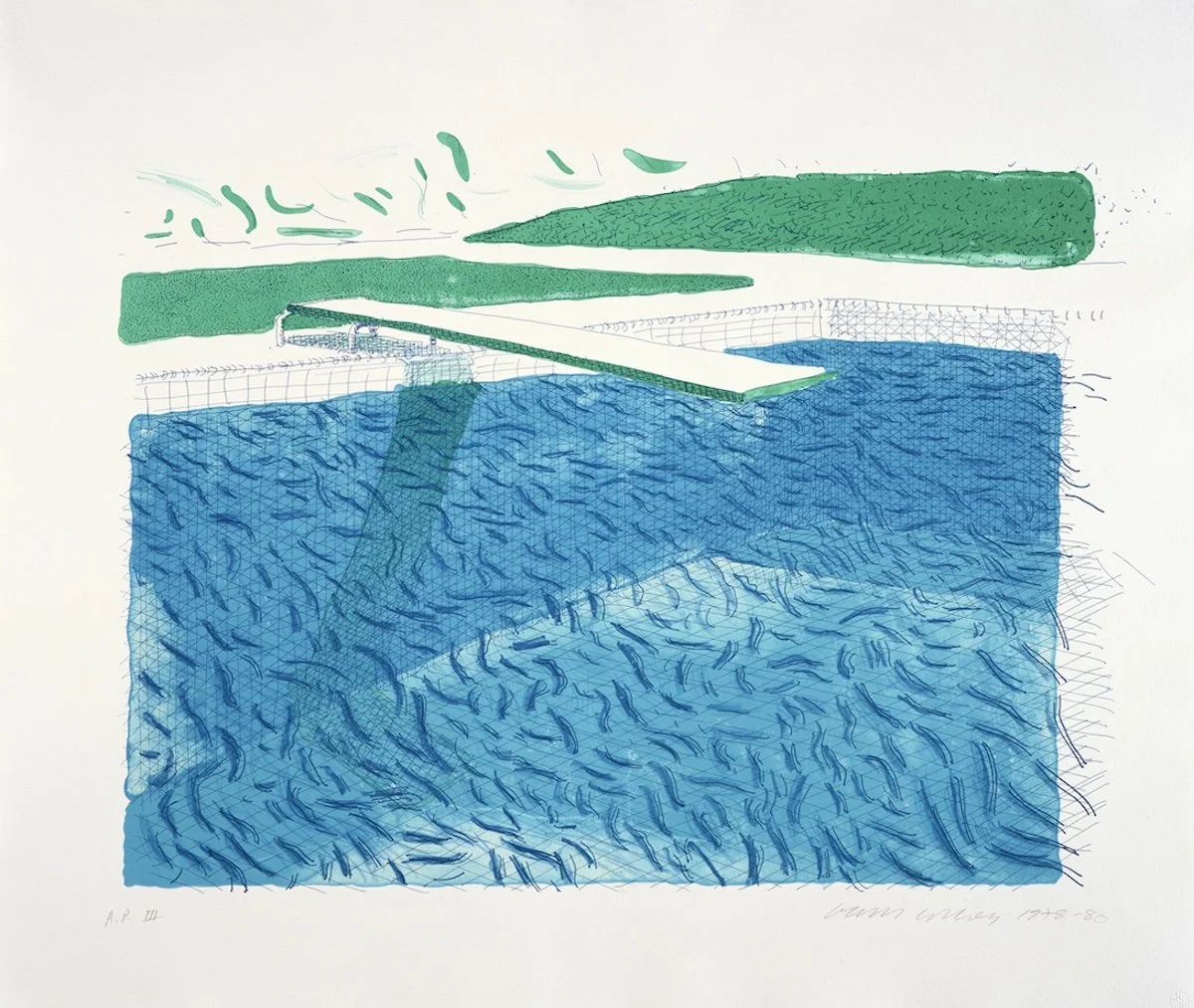
David Hockney, Lithographic Water Made of Lines, Crayon, and Two Blue Washes, 1978–1980, lithograph, edition of 85, 29 ¾ × 34 in. © David Hockney / Tyler Graphics Ltd.
CG: I’ve never seen Jordan’s warehouse in person. I honestly wonder how he has room for everything. He owns 512 Hockney pieces.
DR: But that’s exactly why the warehouse exists. He owns around ten thousand works in total. Only a small number live in his homes. The warehouse includes gallery space where rotating exhibitions can be installed. He invites people from Portland to visit and works with curators from all over the world who come through the collection and develop exhibitions.
Some remarkable shows have emerged from those holdings.
One thing Jordan does particularly well is send exhibitions to places outside the usual art-world centres. Instead of focusing exclusively on New York and Los Angeles, he’ll send exhibitions to university museums and regional institutions in places like Nebraska, Idaho, Virginia, Michigan, and Florida.
CG: I’ve been fortunate enough to write about some of those exhibitions. They often take me to parts of America I would never have otherwise visited.
DR: Right, because Jordan likes reaching audiences who might not otherwise encounter David Hockney’s work. Someone in Florida shouldn’t have to travel to New York just to see a major Hockney exhibition.
CG: He seems very democratic in the way he makes his collection accessible.
DR: Very much so. He’s genuinely passionate about sharing the work, which became extremely important for the Honolulu exhibition. When it travelled, the title kept changing from venue to venue depending on the curator. But Perspective Should Be Reversed became a central work, and in some venues it effectively provided the title for the exhibition.
The piece emerged from a fascinating moment in David’s practice. Around 2013 and 2014 he was completing the 82 Portraits and 1 Still-life series in Los Angeles. I sat for one of those portraits myself. Mine was the fourth painting in the series. As those portraits were being assembled and prepared for exhibition, the project began travelling internationally. It went to London, Melbourne, Chicago, New York, and eventually Los Angeles.
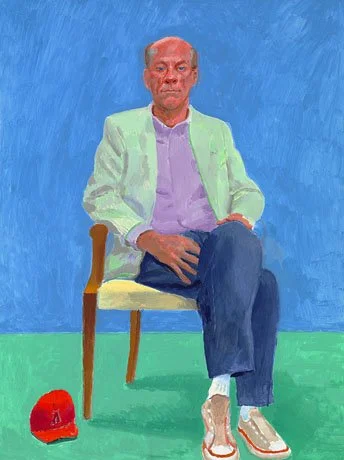
David Hockney. Douglas Roberts 17th, 18th, 19th September 2013. 48 x 36 in. The David Hockney Foundation. © David Hockney.
Once the portraits were finished, visitors kept coming to the studio to see them. David then began making paintings of people looking at the portraits. We would sit in the studio surrounded by the paintings, and he would paint us looking at them. Around that time, his assistant Jonathan Wilkinson discovered software that allowed David to create three-dimensional photographic models from hundreds of digital images.
Imagine David walking around a person taking hundreds of photographs from every possible angle. Those images could then be fed into a computer, which would construct a complete three-dimensional model of the figure. Suddenly David could rotate a person in space and see them from the front, back, side, or above. He became fascinated by it.
A painting might take three days to complete, but one of these digital constructions could be assembled in a single day. While works were being shipped to exhibitions, he spent his spare time experimenting with this new technology.
Perspective Should Be Reversed grew directly out of those experiments.
The room itself is essentially a photograph of the studio. The back wall, the side wall, the curtain covering the storage area, the floor, even the proportions of the room all derive from the actual studio.
David then manipulated the image digitally, expanding the space and reshaping it in Photoshop. The figures throughout the composition are three-dimensional photographic models inserted into that environment. Because he could rotate his models freely, he could position them in any direction he wanted. The entire work is designed to demonstrate David’s argument that Renaissance perspective is fundamentally backwards.
Everything in the picture moves toward the viewer rather than away from them.
If you stand at the edge of the table depicted in the work, you become the vanishing point. The figures point outward toward the edges of your field of vision. The composition mirrors the way the eye actually experiences space.
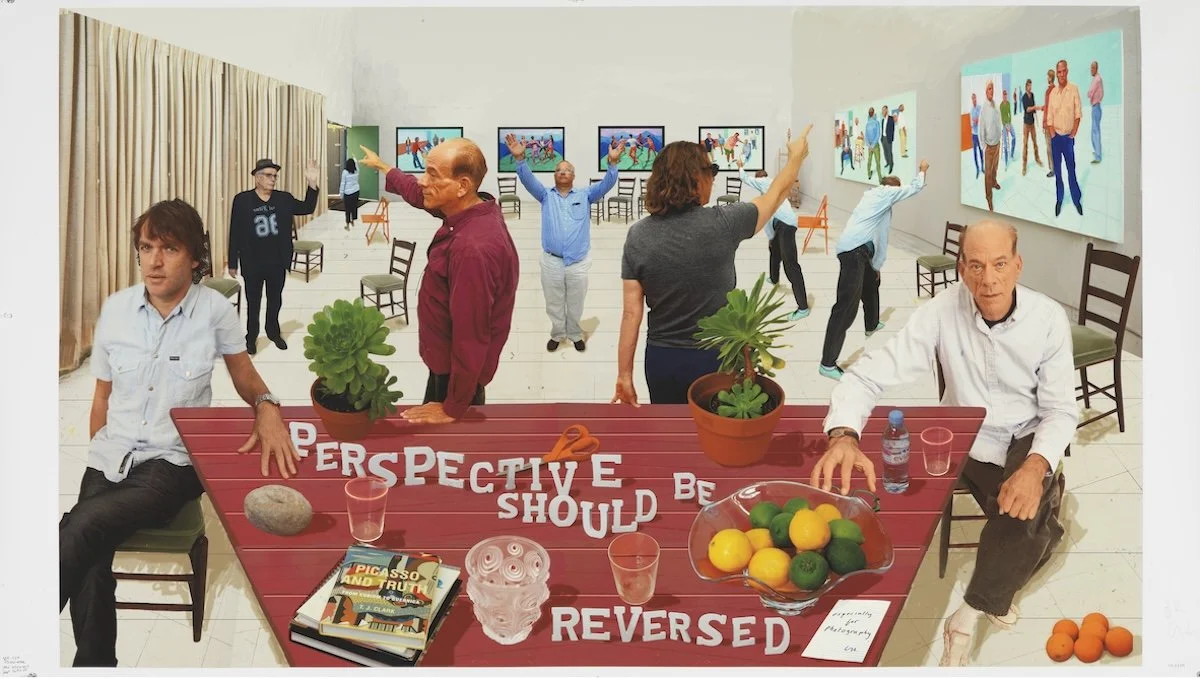
David Hockney, Perspective Should Be Reversed, 2014, photographic drawing printed on paper, mounted on Dibond, edition of 25, 42 ¼ × 69 ¼ in. © David Hockney.
“If you stand at the edge of the table depicted in the work, you become the vanishing point. The figures point outward toward the edges of your field of vision. The composition mirrors the way the eye actually experiences space.”
CG: What’s remarkable is that the horizon line appears repeatedly within the paintings inside the painting itself.
DR: David’s argument was that traditional perspective assumes space moves away from the viewer toward a distant vanishing point, whereas human vision experiences the world in the opposite direction, expanding outward from the eye. Your eye is the centre of experience. The world unfolds outward from where you stand. If you stretch your arms out to either side, your peripheral vision still registers them. That’s how we actually see. Photography, by contrast, imposes a single fixed vanishing point. David spent decades trying to demonstrate that vision doesn’t really work that way.
Even the shadows in Perspective Should Be Reversed were added deliberately. The figures themselves wouldn’t naturally cast consistent shadows because they’re assembled from separate photographic sources. David drew those shadows in afterwards to unify the image. And when you stand in front of the actual work, the detail remains sharp everywhere. The back corner is just as clear as the foreground. That’s much closer to how human vision actually functions. I can look across my living room right now and the far wall remains perfectly sharp. It doesn’t dissolve into blur simply because it’s further away. That’s what David was trying to show. The work is essentially a visual argument about how we actually experience the world.
CG: One of my favourite Hockney quotes is, “There is nothing wrong with photography, if you don’t mind the perspective of a paralysed cyclops.”
DR: But that’s truly what he thought. In Secret Knowledge: Rediscovering the Lost Techniques of the Old Masters, 2001, David argues that lenses, prisms, and mirrors had existed for centuries before photography. Artists were already using those tools to achieve realism long before someone figured out how to chemically fix an image onto a piece of paper.
Photography, as we understand it, emerged in the nineteenth century because people finally discovered a way to permanently capture those projected images. But David’s point was that optical technology already existed. Artists had been using lenses as drawing tools for generations. People often think photography begins the story, whereas David saw it merely as one stage in a much longer history of image-making.
CG: With Perspective Should Be Reversed, the work you’re featured in, I’ve argued that it extends ideas David first explored in the early 1980s with his photographic collages, works like My Mother, Los Angeles, from 1982.
DR: Exactly right. In fact, there’s a painting called The Card Players (2015).
CG: Yes, that’s also mentioned in my essay.
DR: So, in that work, Gary, Brad, and I are sitting there playing cards, and on the wall behind us hangs Pearblossom Highway. David deliberately included it. Pearblossom Highway was one of the final and most ambitious photographic collages of the 1980s. By placing it behind us, he was acknowledging the roots of what he was doing later with his photographic drawings. The technology had changed, but the underlying idea hadn’t. Back in the 1980s, David would take hundreds of photographs, collect the prints from the photo lab, and physically assemble them into a composite image. He called it “drawing with a camera.”
Decades later, software allowed him to achieve something very similar. Instead of manually assembling photographs, the computer could synthesise thousands of images into a single spatial construction.
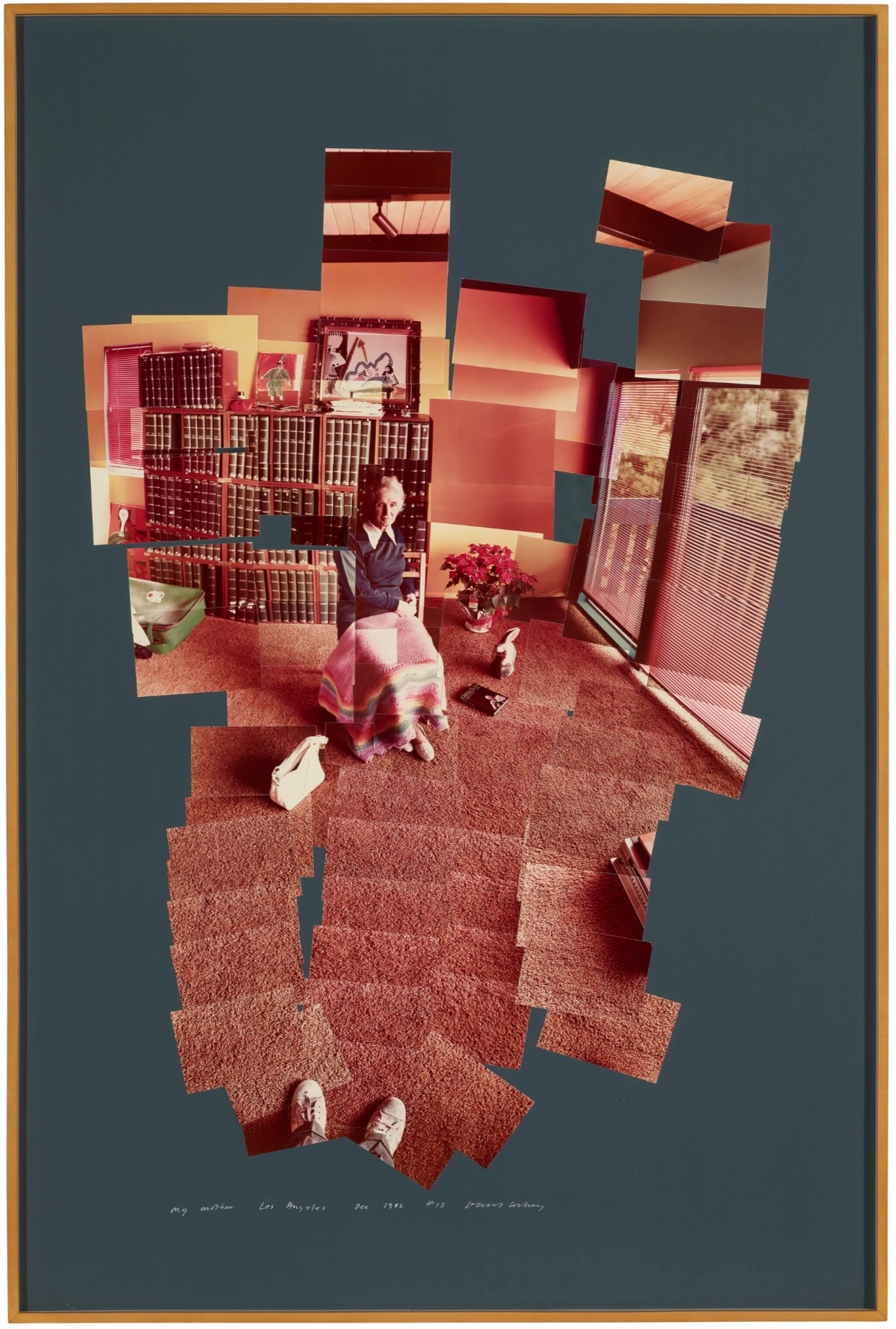
David Hockney, My Mother, Los Angeles, Dec 1982, photographic collage on green card measuring 53 7/10 × 39 4/5 × 1 3/5 in. Photo courtesy of Artsy.
“That’s what David was trying to show. The work is essentially a visual argument about how we actually experience the world.”
CG: In The Card Players and The Scrabble Game, I’ve found myself thinking about both Piero della Francesca’s and David’s lifelong engagement with art history. But there’s another work I wanted to ask about: In the Studio. It’s the one where David stands in his studio surrounded by his own paintings, wearing the blue and green cardigan.
DR: Right. That work was made just before the exhibition opened at Pace.
CG: In 2017. I don’t know whether this comparison is fair, but I’ve written about it in relation to Courbet’s The Painter’s Studio. I’ve suggested that David’s work functions as a kind of contemporary counterpart.
DR: I think that’s perfectly reasonable. There’s nothing wrong with drawing connections between artists across history. Courbet was certainly interested in representing his own artistic world. Whether David was consciously responding to that specific painting, I can’t say. But remember, David read constantly. He probably read two books a week, and artist biographies were among his favourite subjects. It’s entirely possible he encountered those stories about Courbet and absorbed them. That said, I think there’s always a simpler explanation as well. The paintings in this work represent nearly two years of production. Filling the studio with them was a way of celebrating that achievement.
CG: That makes perfect, simple sense.
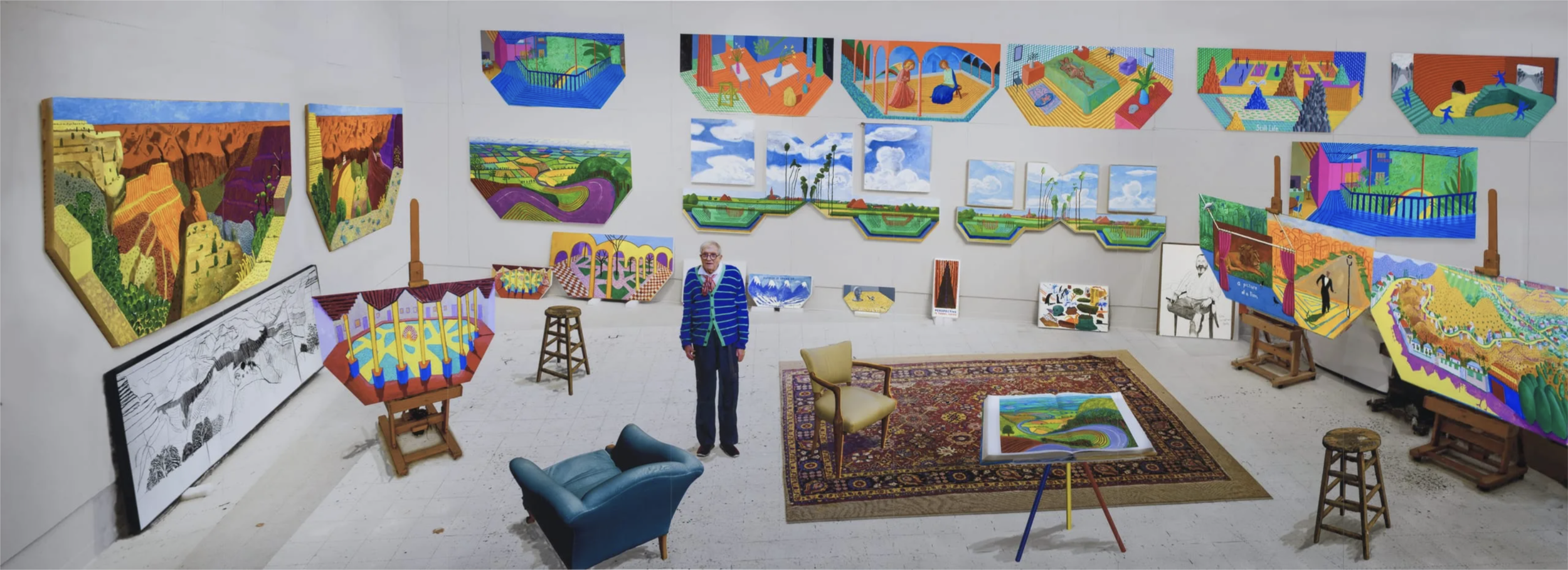
David Hockney, In the Studio, December 2017, inkjet prints on paper, mounted on aluminium, 278 × 760 cm. Tate: Presented by the artist 2018. © David Hockney, assisted by Jonathan Wilkinson.
DR: Also, In the Studio and Perspective Should Be Reversed are essentially two views of the same space. One looks across the studio. The other looks down its length. They’re almost ninety degrees apart.
CG: So if I’m understanding correctly, when we look at In the Studio, we’re effectively standing where the curtain appears in Perspective Should Be Reversed?
DR: Correct. You’re looking across the width of the studio rather than down it. And yes, the studio really did look something like that. There were three easels. There was a stool. There were chairs. But David replicated those elements repeatedly throughout the composition. The paintings leaning against the back wall were all genuinely there. Some of the paintings hanging on the walls were genuinely there too. Many of the paintings on the easels were inserted afterward.
CG: So the work isn’t documenting one actual moment—it’s a composition made of many images captured at different times?
DR: Correct. Nothing in that image is simply a snapshot. Even David himself wasn’t photographed once and dropped into the picture. He was photographed in the round, from every angle, then reconstructed digitally. He could have positioned himself facing away from the viewer if he’d wanted to. He chose to face outward.
The entire image is assembled. It’s a compilation. A synthesis.
All of the paintings you see in it have been digitally inserted. The studio may have resembled that arrangement generally, but David went back and replaced the paintings with proper high-resolution images so they could be reproduced clearly.
David had owned that little stool you see reappearing since the 1970s. It was covered in paint, cracked, and completely falling apart. There was only one of them in reality, but because he’d photographed it from every angle, he could place it anywhere in the composition and repeat it as often as he liked.
CG: You can actually see how worn it is.
DR: Those were the kinds of details that fascinated him.
CG: When you visited the studio, I imagine it was never quite in the same state twice.
DR: Never. Every time I visited there would be new work on the walls. I’d usually see David about once a month, and by then he might have completed three or four new paintings.
The first thing I always did was walk around looking at whatever had recently been finished. Sometimes actual paintings were hanging on the walls. Other times the originals had already been shipped to an exhibition and David would pin large photographic reproductions in their place. He always wanted to be surrounded by work.
CG: So he was constantly looking?
DR: He was constantly looking back at what he’d just made in order to generate the next idea.
That’s one reason these studio pictures are so interesting. They look like documents of a specific moment, but they aren’t. They’re accumulations. The studio depicted in those works never actually existed in precisely that form. What you’re seeing is a compressed version of months, sometimes years, of activity brought together into a single image.
CG: Looking closely at In the Studio, I notice a portrait leaning against the wall. Who is that?
DR: The portrait on the far right is actually David’s cardiologist. It’s a charcoal portrait on canvas. David gave it to him, probably in exchange for medical services. So in a sense he traded paintings for healthcare.
The scribble painting beside it is something else entirely. That was a working canvas where David tested colours, compositions, and ideas. He would add to it over years. It accumulated marks and experiments.
CG: You knew many of the people in David’s life. Did you meet a lot of his friends and partners over the years?
DR: I knew all of them, since Gregory Evans.
Peter Schlesinger was the first major relationship. Peter and David met in the 1960s while Peter was studying at UCLA. They were together for several years before separating in the early 1970s. Peter was an artist himself and eventually felt overwhelmed by living alongside someone who was becoming as famous as David.
After Peter came Gregory Evans, who was in David’s life for roughly twenty-five years. Then there was Ian Falconer. David was fond of Ian, but Ian was more interested in David as a mentor than as a romantic partner. Later David hired a cook named John Fitzherbert. John remained with him for years until visa complications forced him to leave the United States.
That eventually led David back to Yorkshire, where he spent time with his mother and sister and began making the Yorkshire landscape paintings.
Jean-Pierre entered the picture around that period and remained a constant presence in David’s life. It was during this time that Jonathan Wilkinson arrived. Jonathan was hired because he was exceptionally good with computers, software, Photoshop, and emerging technologies. As David became increasingly interested in digital tools, Jonathan became indispensable. He was the person who introduced David to new software, new possibilities, and new ways of making images. The software that generated those three-dimensional photographic figures came through Jonathan. David valued him so highly.
CG: When Jonathan introduced these new technologies, what do you think shifted for David creatively?
DR: David was completely enthralled by it. He wanted to play with it all day. Once he discovered these photographic constructions he became obsessed. After finishing The Card Players, there was a brief period where he had a little free time before his next project. Rather than sitting around doing nothing, he started experimenting with these photographic drawings. One idea led to another. Then another. And before long there were dozens of them. The technology opened up new possibilities, and David was always energised by new possibilities.
CG: There’s another body of work I’ve always found fascinating. The modular landscapes with the strange geometric formats.
DR: Ah, yes. Let’s talk about those. David had a series of canvases made with the corners cut off. Although he wouldn’t have described it that way. He would say he was “adding corners,” giving you two more.
CG: Adding corners? He didn’t cut corners then?
DR: Most people see a rectangle with two corners removed. David saw a rectangle with two corners added. Instead of four corners, you now have six. For him, that changed how the eye moved through the image.
Think about standing in a landscape. You can look down and see your feet. You can look straight ahead. You can also see outward through your peripheral vision. Those additional corners expand the visual field. The shape reflects the way vision actually works.
CG: That’s fascinating.
DR: The best example is probably the courtyard painting based on Hotel Acatlán in Mexico. The format allows your eye to move around the courtyard and then back to where you’re standing. The shape isn’t a gimmick. It’s another attempt to challenge conventional perspectives.
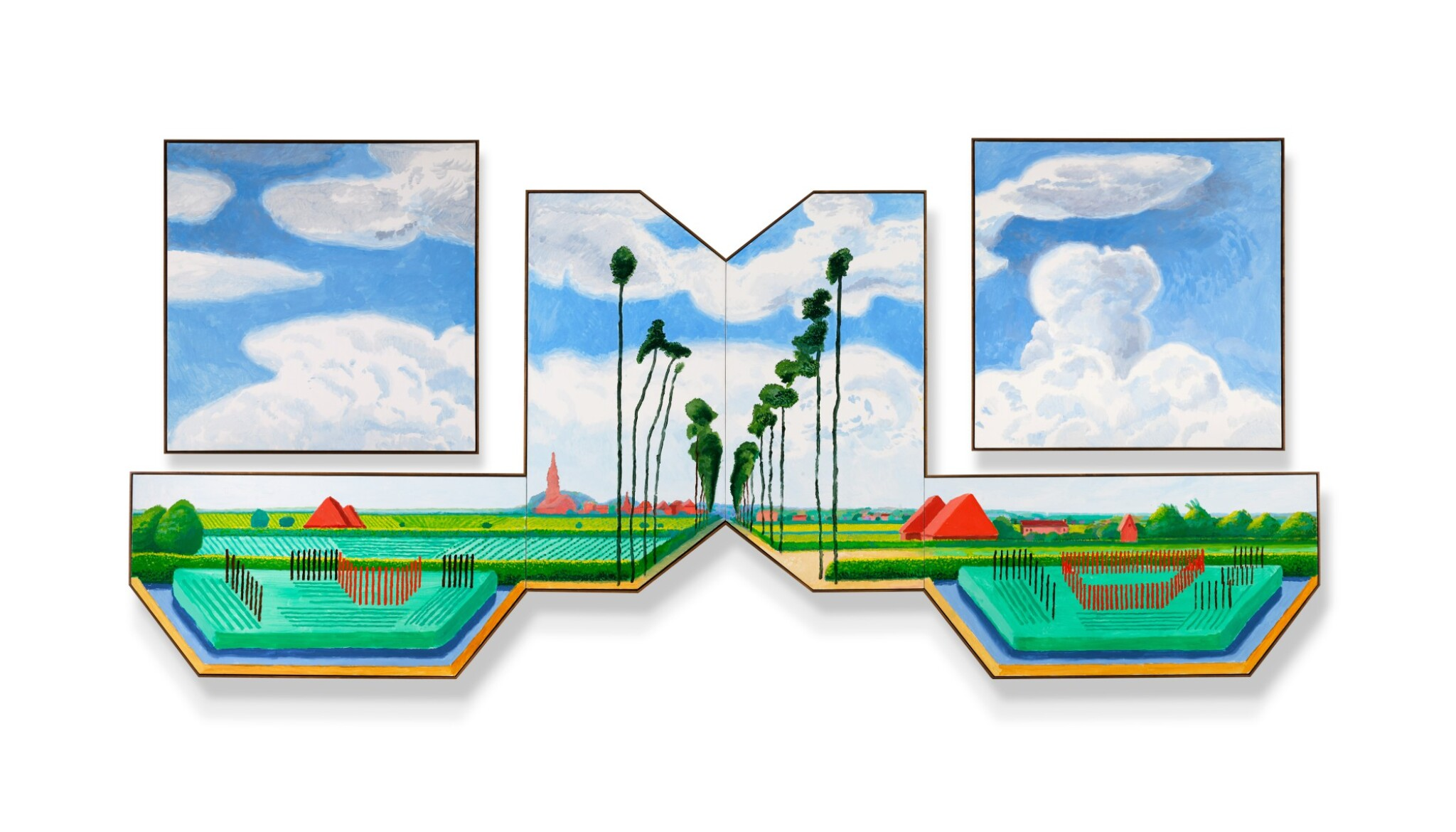
David Hockney, Tall Dutch Trees After Hobbema (Useful Knowledge), 2017, acrylic on canvas, in six parts, 165.1 × 368.3 cm (65 × 145 in.). Photo courtesy of Sotheby’s.
CG: The work I’m thinking about in particular is Tall Dutch Trees after Hobbema, based on Meindert Hobbema’s The Avenue at Middelharnis painted in 1689.
DR: I was actually in the studio while he painted that. In fact, he painted it twice. First as a smaller version and then again on a much larger scale.
CG: When we’re looking directly through the centre of the composition, where our eye follows the path between the trees, are multiple canvases meeting at that point?
DR: Yes. The work is constructed from several canvases. Four of the main sections are made from those six-cornered formats, and then additional canvases form the clouds above. The seams become part of the image. They’re not hidden. They’re active. If you look closely, the entire structure reinforces David’s idea that perspective should expand outward rather than collapse toward a single point.
CG: I’ve always been intrigued by the negative space in those paintings. It feels like a completely new device.
DR: The negative space is actually occupied by the viewer. That’s the key. David wanted the painting to project toward you. Those missing areas aren’t empty. They’re where you stand. That’s why he preferred to think of these works as adding corners rather than removing them. The shape extends vision. It doesn’t reduce it.
CG: That’s such a “Hockney” way of looking at it. Did he continue developing that six-cornered format?
DR: No, not really. What you’re looking at is essentially the entire experiment. He ordered a group of those canvases and then spent time working through the possibilities. The large Dutch landscape was one of the last works made with them.
CG: They’re beautiful paintings, but so unlike his signature works. When you look at some of his earlier work from art school, it’s almost completely unrecognisable. You’d never guess Hockney made it.
DR: Right, so those ones you’re talking about, from the late 1950s and early 1960s, owe a tremendous debt to Jean Dubuffet. Dubuffet and Francis Bacon were enormously important when David was young.
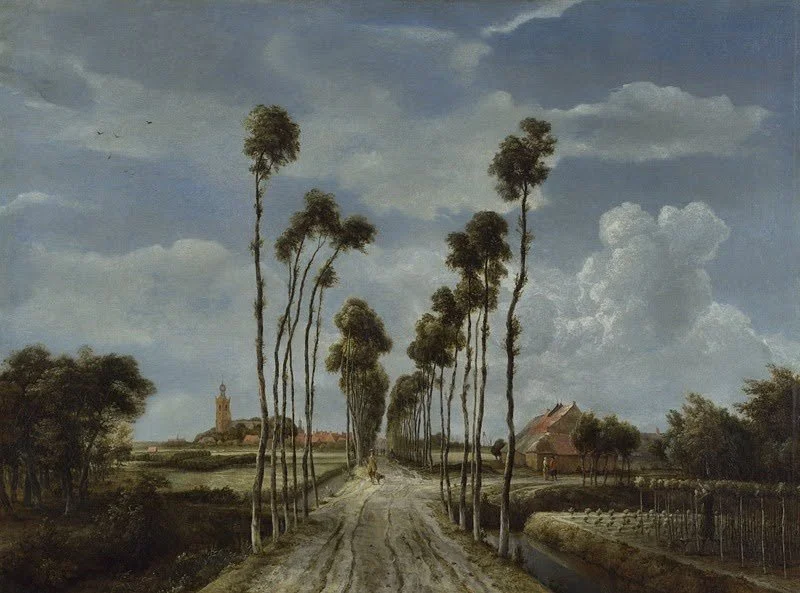
Meindert Hobbema, The Avenue at Middelharnis, 1689, oil on canvas, 103.5 × 141 cm. This painting held Hockney’s attention for more than sixty years. Image courtesy of the National Gallery, London.
CG: Would he have seen Dubuffet in Paris? Somewhere in France?
DR: He would have encountered both while he was a student. I am not sure where originally, but at some point there was a major exhibition of American Abstract Expressionism travelling through London. Suddenly everyone at the Royal College wanted to paint abstractly.
David tried it and hated it, so Dubuffet became a useful compromise because his work remained figurative while still pushing toward abstraction. David could borrow that language without abandoning the figure altogether.
CG: So he rejected abstraction fairly early.
DR: Completely. Several early paintings are literally painted on top of failed abstractions. We Two Boys Together Clinging, from 1961, for example, was painted over an abstract painting he didn’t like. He wanted to paint the world. Even as a teenager in Bradford he was painting streets, people, places he knew.
Abstraction simply didn’t hold his attention.
CG: He once said “cubism was the first major attack on five hundred years of perspective.”
DR: That’s always the better quote to use.
CG: What’s interesting is that he seems to carry that idea all the way through to works like the Celia prints.
DR: The Celia works came out of David’s collaboration with Ken Tyler in the mid-1980s. When Tyler left Gemini and established his own workshop on the East Coast, David followed him there. Those Moving Focus works are directly related to cubism.
Ken was brilliant. He made his own paper, which David loved, and he also developed systems that allowed David to work on layers of Mylar. David could draw on one sheet, place another sheet on top, continue drawing, and then have printing plates produced from those layers.
It gave him tremendous freedom. The Celia and Gregory images are among the best examples of David fully embracing Picasso’s lessons. If you look at the Gregory image, you see multiple viewpoints simultaneously. The head is facing forward and turned sideways. An arm appears in more than one position. The legs occupy several moments at once. It’s as if Gregory shifted in the chair over a two-hour sitting and David recorded all of those moments simultaneously.
That’s fundamentally what Picasso was doing. David finally understood that. He realised that a painting records duration. A person turns their head. Looks down. Looks away. Crosses a leg. A painting can contain all of those moments at once.
A photograph can’t.
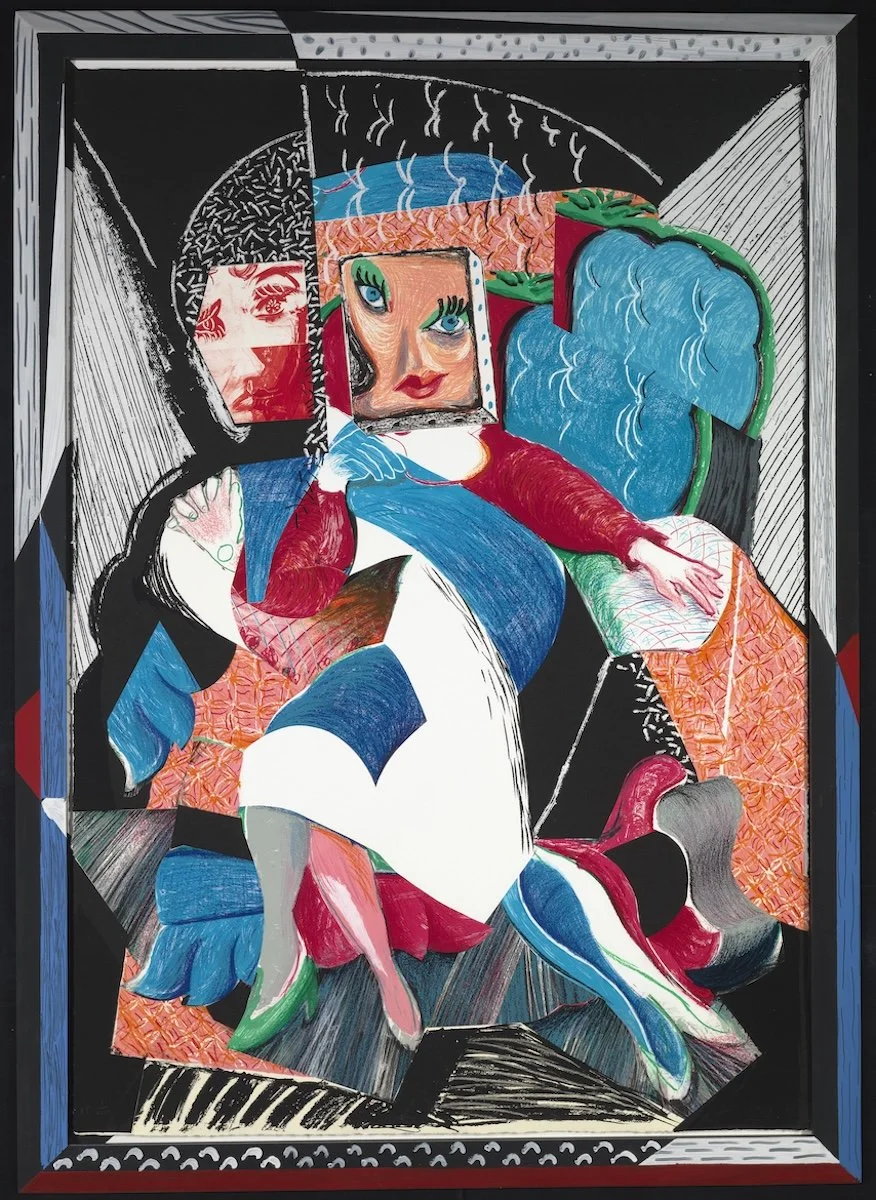
David Hockney, An Image of Celia, 1984, lithograph (edition of 40), screen print, collage, hand-painted frame, 59 ½ × 41 in. © David Hockney / Tyler Graphics Ltd. Photo by Richard Schmidt.
CG: I’d be remiss not to ask about Rauschenberg at this point.
DR: David and I actually visited a major Rauschenberg retrospective together in London about five years ago. We loved the first rooms. The 1950s and 1960s work was fantastic. Though, by the time we reached the later decades, both of us were getting bored.
CG: Really?
DR: 100 percent. David admired Rauschenberg’s inventiveness. He loved the way he transferred imagery from newspapers and everyday life onto the canvas. The collage-logic fascinated him. But David also felt Rauschenberg became trapped by that approach; he kept returning to the same strategy. David couldn’t work that way. If he felt himself getting bored, he moved on immediately. He never wanted to get stuck in a foxhole with no exit. That’s one reason his career kept changing direction. The six-cornered paintings are a perfect example. He explored them. Learned what he wanted to learn. Then moved on.
CG: He didn’t seem too precious about his ideas, or completely married to any of them for that matter.
DR: No. People often imagine artists becoming attached to a particular style or method. David wasn’t interested in that. He was interested in curiosity. Once he understood something, he wanted to discover something else.
CG: But I guess he was meticulous about preserving his legacy?
DR: He had to be. That’s why the foundations exist. There’s a foundation in Britain with an enormous amount of work in its possession. Far more than people realise.
CG: More than what’s in private collections?
DR: Absolutely. I would guess only a fraction of David’s total output is actually out in the world. The foundations hold an extraordinary amount of material. The purpose is to preserve the work and eventually distribute it responsibly. The Warhol Foundation is probably the closest comparison. I suspect we’ll see major gifts over the next decade, probably to institutions that supported David throughout his career. Those relationships matter. Museums that championed David are likely to become beneficiaries, and they’ll be rewarded for that commitment. Works will be donated, exhibitions will be organised.
CG: Do you think Hockney’s London properties will eventually become public?
DR: There’s a Munch Museum. There’s a Picasso Museum. It’s difficult to imagine there won’t one day be a Hockney Museum somewhere. I’d personally love to see one in Los Angeles.
CG: I know this is an absolutely morbid question, but how does David’s passing affect his market?
DR: Honestly, I think much of the market adjustment already happened. Over the last year or two, prices have risen dramatically. The recent sales of the Arrival of Spring works pushed things even higher. A lot of people were already anticipating this moment. So I don’t expect some enormous posthumous spike. I think we’re already very close to the top of the market. There may be short-term excitement. There may be a brief surge. But I suspect we’ll see a plateau rather than a dramatic escalation.
CG: That’s interesting.
DR: The iconic works will always perform well. The swimming pool prints, for example, remain incredibly desirable. Those have steadily climbed from tens of thousands into six-figure territory. But even there, the market feels mature. It’s difficult to imagine a sudden doubling from here. David isn’t Basquiat. Basquiat had a tragically short career and a finite body of work. David worked for seven decades. There are thousands upon thousands of works.
The market already understands that.
CG: What about the iPad drawings? Were they initially met with resistance?
DR: At first, yes. People struggled with the idea. You’re drawing on a sheet of glass with a stylus. How do you exhibit that? How do you share it? The answer was printing. David would print the digital files as large as technology allowed. At the beginning that meant the maximum size an Epson printer could produce. Then he realised he could combine multiple panels and create mural-scale images. The remarkable thing was that they retained their clarity. No matter how large he made them, the image didn’t fall apart. The files remained incredibly crisp. The scale could increase without sacrificing quality. Suddenly he was making seven-foot-tall, eight-foot-wide pictures from drawings made on an iPad. That was genuinely exciting.
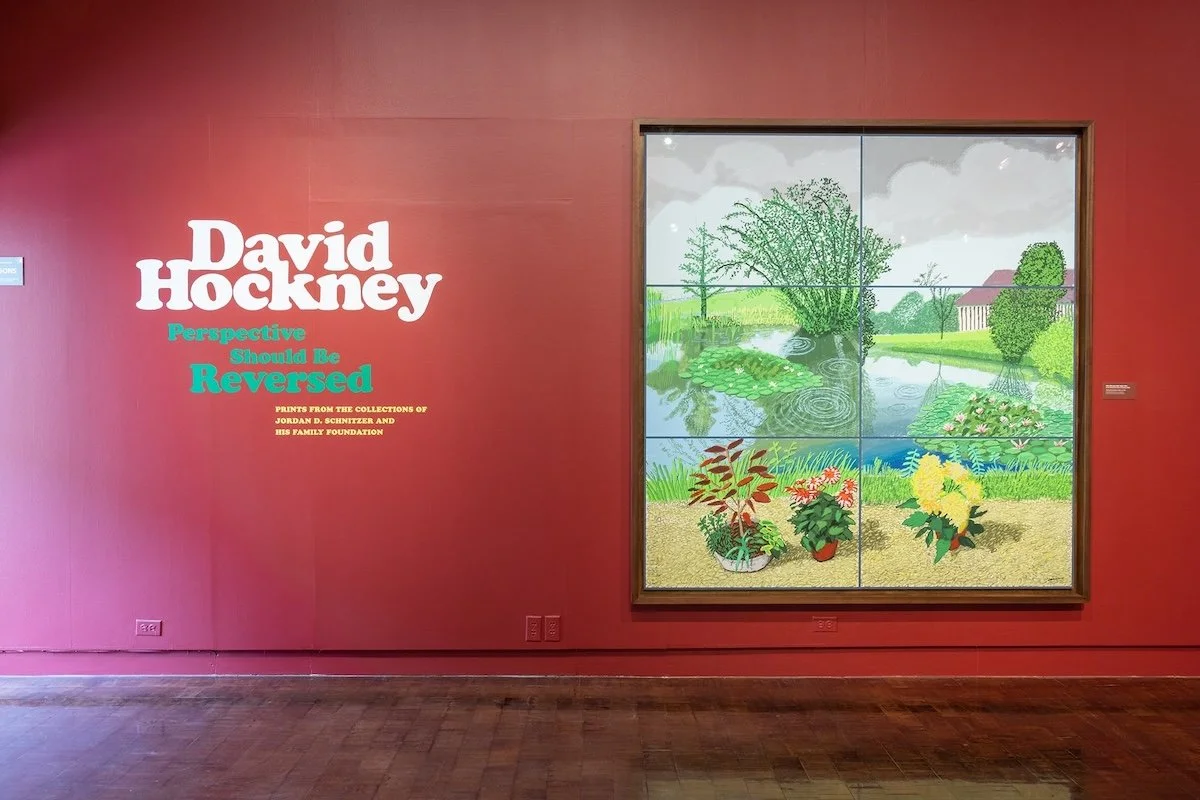
David Hockney’s Perspective Should Be Reversed, to , at the Honolulu Museum of Modern Art, Hawaii.
CG: Some of them are extraordinary. Like 10th–22nd June 2021, Water Lilies in the Pond with Pots of Flowers, for example. It doesn’t reproduce particularly well, but standing in front of it was another experience entirely.
DR: I completely agree. They really need to be seen in person. At first, David’s argument was fairly simple. He’d say, “I have staff to pay. I can’t sell the iPad itself, but I can sell a print made from the iPad drawing.” His dealers needed inventory, exhibitions needed work, and the only practical way to share the drawings was through printing them.
The larger works were generally editions of twelve. The smaller works were editions of twenty-five. But what’s important is that he didn’t produce editions for everything. There are thousands of iPad drawings, but only a relatively small number of them ever became editions.
The same is true for the Arrival of Spring works. There are fifty-five Woolgate images in total, and they were shown together at various points, including the Royal Academy and later exhibitions. I believe all fifty-five were included in the Paris exhibition as well.
CG: I love the Royal Academy. I was there earlier this year for the Kerry James Marshall exhibition.
DR: That was a great show.
CG: It will forever occupy my mind. Doug, you’ve given me an incredibly rich account today. I really appreciate it.
DR: That’s perfectly fine. I’m happy to talk to you, Clare.